Sunday, December 14, 2008

Najdorf-Czerniak 1929 Match, Game 1

Czerniak,Moshe - Najdorf,Miguel [A15]
Warsaw Match (Game 1), Oct. 1929
[Annotations: Czerniak]

1.Nf3 Nf6 2.c4 d6 3.g3 Bf5 4.Bg2 Qc8 Typical of young players... 5.0–0 Bh3 6.d3 e5 7.Nc3 Bxg2 8.Kxg2 Nc6 9.Nd5 Nxd5 10.cxd5 Ne7 11.e4 c6 (Not 11...f5? 12.Ng5) 12.dxc6 Nxc6 13.Be3 Be7 14.Rc1 Qe6 15.a3 0–0 16.Ng1!

The excellently placed knight defends three vulnerable squares - e2, f3 and h3 - and allows the White queen to start a counterattack on the queenside. (Not to be played is 16.d4? exd4 17.Bxd4 Qxe4 18.Re1 Qd5! 19.Rxc6? bxc6 20.Rxe7 c5! and Black wins.) 

16...f5 The opening of the f-file is inevitably favourable for Black. 17.exf5 Rxf5 (Of course not 17...Qxf5 because of 18.Qb3+ and Qxb7; however, probably better is 17...Qd5+ ...) 18.Qa4 White takes advantage of a momentary "lull before the storm" to start a strong counterattack on the queenside. 18...Raf8 (18...a6 gave a more solid game, but Black heads for a clarification of the situation.) 19.Qb5! R5f7 20.f4 exf4 21.Bxf4 g5! 


Black energetically heads for victory. The last move secures the f-file for Black's rooks. However, the excellent g1–knight saves an almost hopeless position.

22.Bd2 (If 22.Bxg5? Nd4 23.Qa5 b6! gains a piece.) 22...a6 23.Qc4! It's still not possible to take on b7, because of Qd5+ ... With the text move White forces his opponent to play ...d6-d5, which takes away that square from the black queen. 23...d5 24.Qb3


24... Nd4? This saves a hopeless situation. (Black overlooked the winning move 24...Bc5!! with the further 25.Rxf7 Qxf7 winning... The text move allows White to completely equalize the game.)

25.Qxb7! Ne2 26.Rce1 (If 26.Rfe1 there follows an effective mate 26...Rf2+ ...) 26...Rxf1 27.Rxf1 (Not 27.Rxe2 Rxg1+) 27...Nxg1! (Much better than 27...Rxf1 after which White would still have chances, e.g. 28.Kxf1 Nxg1 29.Kxg1 ...) 28.Rxf8+ Kxf8! 29.Kxg1 Bc5+ 30.Kh1? (Better is 30.Kf1) 30...Qe2 31.Qc8+ Kg7 32.Qxc5 Qf1+ 33.Qg1 Qf3+ 34.Qg2 Qd1+ 35.Be1! Qxe1+ 36.Qg1 Qe2! ½–½

Najdorf - Czerniak Match, 1929 (Part II) - Introduction

As said before, Yochanan Afek had kindly let me copy Moshe Czerniak's notebook of his games in Poland in the 1920s. The notebook includes a match between Czerniak and Miguel Najdorf, which I mentioned before -- see the previous post on this blog about the Najdorf-Czerniak match.  

Marek Soszynski had kindly agreed to transcribe the games and the annotations into 'Chessbase' format. He, together with Tomasz Lissowski, encouraged me to contact chessbase to see if they might be interested in publishing it. They have just contacted me and said they'll add it to their upcoming mega database 2009, and that I 'need not delay' in publishing it on my blog. Therefore, I am finally doing so. 

Mr. Soszynski notes: 'All the games and the variations [in the chessbase format, which I reproduce in this blog - A. P.] are Czerniak's. I have added practically nothing', although some annotations were omitted as 'flawed or uninteresting', and others (the majority) due to the illegibility of the original manuscript. 'The standard of play was high. All the games, without exception, were interesting - with a rich combinational thread. The second game of the match merits particular attention'. 

The match took place in the Chessplayers' Association, Warsaw, Poland, Oct. 14-28, 1929. (3 games a week). The time control was 20 moves per hour, and the winner was the first to win five games, draws not counting. Najdorf won by the convincing score of +5 -1 =2.

In the following posts I will enter the games one by one. 

Wednesday, December 3, 2008

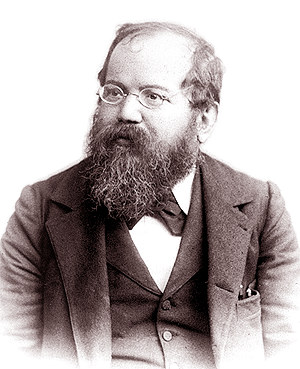
Steinitz vs. God (again)


Wilhelm Steinitz. Credit: 'Wilhelm Steinitz' entry in www.wikipedia.com .

There is an old story -- or, rather, libel -- that Steinitz (incidentally, a Jew, of course) had once said that he could beat God even if he gave God pawn-and-move odds. Naturally, no exact source is ever given for this alleged saying, and it is merely repeated from one book to another whenever an incident about the alleged insanity of chess players in general, and masters in particular, is needed to spice up the book.

In Alifut Yisrael be'Shachmat 1961/62 ('Israeli Chess Championship 1961/62', Ed. Eliahu Shahaf, "Mofet" press, Tel Aviv, 1962), we find, however, a different version of the story (p. 19):

Wilhelm Steinitz, who was self-confident enough to once say that even God couldn't give him pawn and move...
Naturally this version of the story is unattributed, and it is used to "spice up" an article about opening theory. However, it follows Irving Chernev's The Bright Side of Chess [1948] in suggesting that Steinitz did not claim he could beat God while giving pawn-and-move odds, but merely that God could not beat him if God gave him pawn-and-move odds. (See Edward Winter's article, Steinitz versus God).

There is, naturally, a great difference between the two claims. In Chernev's and Shahaf's version of Steinitz's quip, 'God' is just a metaphor for 'a perfect player', and the claim is pure Steinitz: colorfully put and not suffering from false modesty, but in essence simply the insightful (and perhaps true) claim that the playing strength of the best masters of his time had so improved, that it practically close to perfection. (This happened, presumably, due to the new, scientific understanding of the game's strategy, of which Steinitz was the most important developer.)

One wonders (see also Winter's article) whether Steinitz really made either claim. It is doubtful he ever did. But, if he did, I would bet a significant sum he made the latter claim, and that sensation-seeking writers, making use of Steinitz's real mental illness at the end of his life as an excuse to print "crazy chess player" canards, turned the story on its head and made Steinitz's perfectly reasonable remark into "proof" of megalomania.

Monday, December 1, 2008

Lowest-Rated Player to win National Championship?


Zadok Domnitz. Photo Credit: Shachmat [Israeli Chess Association's magazine], Year 2 No. 5 (Dec. 1963), p. 6.

The Israeli chess championship of 1961/62 (officially, of the Hebrew year H'TSKV -- 5,722 -- which began in September 1961) caused a sensation: the three winners (with 9.5/15) included not only IM Yosef Porat (who played in all previous championships, from 1935 on, only once finishing below 3rd place) and Itzchak Aloni (a player in the championships since 1945 -- which he won -- finishing below 3rd only twice), but the 28-year-old Zadok Domnitz. Not only did he not have any FIDE title, he was not even an Israeli Chess Association master -- merely a 'senior candidate master'. The other participants were mostly ICA masters, including two FIDE IMs (Porat and Moshe Czerniak).

Domnitz is probably one of the lowest-rated players to ever win a national championship, at least in countries where chess is popular. His victory caused quite a sensation, although Aloni eventually won the championship on the three-way tie-breaking match (scoring 2 /2). (To avoid a possible misunderstanding, 'low rated' does not imply 'weak'!)

Aloni's Opening Style


Itzchak Aloni, a caricature by Yaakov Zehavi. Credit: Alifut Israel Be'Sachmat 1961/62 [Israel's Chess Championship 1961/62] by Eliahu Shahaf [Editor], et al. "Mofet" Press, Tel Aviv, 1962.

From the book given above (p. 117), in the English-language introduction by Shahaf: 'Granted, he is not the expert as far as openings [sic] theory is concerned... "colour being the only element uniting his pieces after they have left their initial positions", as one [critic] had put it.'

Or, as quite a few of those I interviewed about Aloni put it: 'he felt lost if he came out of the opening with a reasonable position'.

Thursday, November 20, 2008

Botvinnik vs. Petrosian... but not THOSE Botvinnik and Petrosian.

From an interview I had with Yochanan Afek in the 'Chess House' (the headquarters of the Israeli Chess Association in Ramat Aviv, Israel): 

[Young man passes us, waves to Afek; Afek exchanged a few polite words.]

Afek: You know who this was?

Me: No. 

Afek: It's Mikhail Botvinnik. No, not that one, of course; it's just his name.

Me: With a name like that, he must be a good player...

Afek: Pretty decent! He's a master who played in some international youth tournaments. By the way, in one of those, he played a young Armenian player with an interesting name...

Me: Armenian? Don't tell me... isn't there a young player called... 

Afek: ...yes, Tigran Petrosian

Petrosian vs. Najdorf (Blitz) Match


From Zvi bar Shira and Avner bar Nir's report on the 1964 Chess Olympiad in Tel Aviv, Israel (Ma'ariv, Nov 28th, 1964):
'While the Olympiad was going on in the playing and demonstration halls, Najdorf and Petrosian sat privately to play a match of blitz games. The few spectators heard, after every strong move, comments such as "My name is Najdorf!" or "I'm Petrosian!". During the match the world champion [Petrosian -- A.P.] came "out of his shell" and was seen as a humorous, witty man.'
While such offhand reports shouldn't be taken too seriously as character analysis, this certainly fits with Edward Winter's note (reviewing The Games of Tigran Petrosian) that Petrosian was well liked -- and his chess greatly appreciated -- by his colleagues. He was very far from the dour, humorless 'drawing master' he was supposed to be according to the popular chess press, merely for, in Winter's word, 'not playing like Tal'.
Is anything else known about these games? (Perhaps one of the spectators recorded the moves?) Unfortunately, even the match's result is unknown, since the very line where the reporters gave it was garbled by the printer.

Edited: while the facts are as written in the newspaper, most likely, the dates must be wrong: Nov. 28th 1964 was a Saturday, and newspapers in Israel do not come out on that day. 

Tuesday, November 11, 2008

Problemists in the Desert


From the 1950s to the 1960s, the chess column in Al ha'Mishmar ("On the Guard", whose masthead is given above [photo credit: Wikipedia]), the organ of the socialist kibbutzim and moshavim (agricultural communes), dealt almost exclusively with chess studies and problems, demoting over the board games to second place.

I wonder what the reason was? Probably the fact that most of its readers were in small, more or less isolated communities, where finding opponents for over-the-board play was a serious challange, leading -- by default -- to the popularity of problems and studies.

If anybody has more concerete information on the reason, I'd appreciate it.

Saturday, October 25, 2008

Reshevsky Simul Disaster

This game was one of two games lost in a simultaneous display by Samuel Herman "Sammy" Reshevsky given in Haifa, Israel, on Nov. 24th, 1958, during the first international tournament held in Israel (which he won). The overall result was +31 -2 =6.  Goes to show that even the great suffer from chess blindness! 

White: Samuel Reshevsky. Black: Zalman Margalit. Annotator: A. A. Mendelboim (Davar's chess columnist).

1. d4 Nf6 2. c4 e6 3. Nc3 Bb4 4. e3 c5 5. Nge2 Nc6 6. a3 Qa5 7. Bd2 d5 8. axb4? (Ng3! is necessary) Nxb4 9. Rxa5?? (Qa4+!) Nd3#

The amusing final position deserves a diagram:

Source: Davar, Nov. 17th and Dec. 5th, 1958.