Friday, February 18, 2022

Ezra Glass, from China to Israel


A frequent correspondent asks us how reliable are the stories of Ezra Glass being in Shanghai an d becoming the local chess champion there during the second world war. Another correspondent, Herbert Halsegger, supplied us with the following cutting, from the Washington (D.C.) Evening Star, March 17th, 1949, p. A-6. 

In it we learn the Glass was travelling to Israel from China, with a group of another 191 Jewish DPs ("Displaced Persons," i.e., refugees) from China, en route to Israel. The article notes Glass taught them to play chess during the long journey. It is noted he was champion of Austria "and of the far east" before the war. 

Chess in Schools


There had been many efforts to promote chess in schools in Israel. Shaul Hon, the editor of Davar's chess column in the 1940s, had occasionally promoted such efforts. Here is one such example, from Davar's  9 December 1949, p. 17 of the weekend supplement. We than Moshe Roytman for bringing this example to our attention. 

A teacher in a Hedera school accepted the parents' requests in a class meeting and agreed to give a chess lesson to all the pupils in the class. For now, the class is one hour a month during school time. It caused  much excitement and interest among the pupils. 

Not exactly a mass movement, but it's a start! 

Chess Problemist Rescued


Even at the height of the second world war, some Jewish players were rescued. In the following note, by the Aufbau (an German and English language Jewish weekly from New York) reports on New Year's day, 1943 (p. 24) that the "famous chess problemist Otto Gross," formerly from the Chess Club Anderssen, Frankfurt, is in New York, and promised his "lively participation" in chess activities. We thank Mr. Herbert Halsegger for bringing this report to our attention.

Saturday, January 15, 2022

Stalin and Chess II

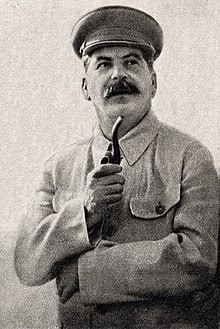
Joseph Stalin, 1937 propaganda photo. Credit: wikipdeia.

A previous post noted that Stalin was reputed to be a strong chess player, and doubted this is accurate. A correspondent notes Stalin did play chess. He notes the evidence is in Stephen Kotkin's biography of Stalin:

[Kotkin] is an outstanding scholar who specializes in Stalin. You can find an [English]  translation  in the first volume of his Stalin trilogy of a letter written by Yakov Sverdlov on 12th March 1914, in which Sverdlov, who had an elephantine memory, boasted of beating the future despot...

Our correspondent found the Russian text here, and provides the English translation, in p. 154 of (one of) the English editions of Kotkin's Stalin trilogy: 

My friend [Stalin] and I differ in many ways," Sverdlov wrote in a letter postmarked for Paris on March 12th, 1914. "He is a very lively person and despite his forty years has preserved the ability to react vivaciously to the most varied phenomena. In many cases, he poses fresh questions where for me there are none any more. In that sense he is fresher than me. Do not think that I put him above myself. No, I'm superior [krupnee], and he himself realizes this... We wagered and played a game of chess, I checkmated him, then we parted late at night. In the morning, we met again, and so it is every day, we are our only two in Kureika.

The incident occurred, notes our correspondent, when Stalin and Sverdlov were exiled together to the very small village of Kureika before the first world war. He adds that Sverdlov is a partial source, as he quickly fell out with Stalin, but nevertheless there are two reasons to believe Stalin was indeed a weak player. 

First, if Stalin were any good, good players among the bolshevists, e.g., Ilyin-Zhenevsky or Krylenko would have noticed. Second, Sverdlov boast that he checkmated Stalin (as opposed to have won) is typical of beginners, suggesting Sverdlov himself was a weak player, and yet he beat Stalin.

(Photo credit: Wikipedia's entry about Joseph Stalin.)


Czerniak in Hoogoven, 1966


Herbert Halsegger notifies us of this very nice photographs of Czerniak, playing in Hoogoven, 1966. The photo is available on the Wikimedia Commons web site.

Friday, December 31, 2021

Mistaken Identity


Herbert Halsegger notes that the Judische Rundschau of 13.8.37, p.11, has a collection of photos from Palestine. One of them is supposed to show two men playing chess. But the players are likely Arab (the fez and clothes suggest) and the board seems to have no chess pieces and a heightened border. This means they are probably playing, not chess, but the popular oriental game of backgammon. 

Yehudi Menuchin and Chess


Yehudi Menuchin, the famous violinist, was a chess fan. Naturally interested in Jewish chess in general, the Palestine Post published a friendly game he played on 14.9.45, p. 6. Menuchin lost this game (against Cpl. Aird Thomas) and the final note adds: "every chess player will agree Menuchin is a great violinist."

There's no arguing with that. 

Chess in the Crossword Section


Having chess terms, or chess personalities, as items in crosswords isn't rare. But here is something much more unusual. As our frequent correspondent Moshe Roytman notes, in La'merchav, 21.9.60, p. 17, there is an entire crossword made only of chess hints. 

The clues range from the "one of the world's chess greats who died young" and "a famous studies composer" to "the first name of the ex-Jerusalem champion" - and even clues such as "owner of a chocolate factory and a great chess fan" and "the first and last name of a shepherd in the lower Galilee, one of the best Israeli problemists." The latter, by the way, is Yechezkel Hillel.


Mr. Lasker in Trouble with the Authorities


We keep forgetting that not everybody plays chess. Moshe Roytman notes that in 1975, Tel Aviv's municipal government sent a letter to "Mr. Emmanuel Lasker" in Ha'yarkon St. 54, warning him that he must repair his dilapidated house. The address, of course, was that of the Emmanuel Lasker club, not that of "Mr. Lasker," who died in 1941. (In any case, it should be Dr. Lasker.) 

The report adds - on what authority we do not know - that Lasker "planned to settle in the country" (i.e., Israel / Palestine) despite the (correct) fact that he never managed to even visit it. It also adds, less accurately, that Lasker died "more than 40 years ago," which would mean before 1935. 

Source: Ma'ariv, 2.9.75, p. 17.

P.S.

For some reason formatting is off and cannot be fixed in this post.