Friday, April 23, 2010

Chess, Math, and Taxes


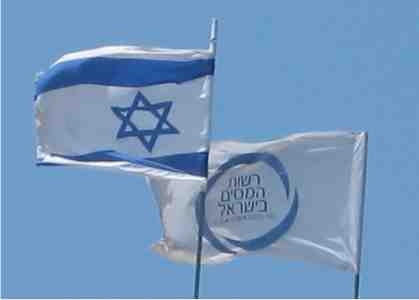
The flag of the Israeli tax authority (Image credit: CRW Flags Inc.)

A translation from Amnon Dankner's article, today (23/4/2010), p. 26 of Maariv's (a large Israeli daily) weekend supplement, about how was forced to pass the matriculation exam in mathematics:
Nothing worked, until he [Danker's father] noted that, since there's a connection between chess and mathematics, perhaps he should look in the back room of the "Orient" coffee house. This was the place where our city's chess players would sit and play and shout and insult each other, and of all of them, Leon Tefilinski caught his eye. A rough man, with a red nose and thick glasses, a gravel-like voice, smoking cigarettes and with an eternal wool shawl around his neck.

My father noted two qualities. First: the man was a natural pedagogue. Every time his opponent made some monumental mistake, Tefilinski would strike him in the arm, shouting 'gurnisht! Schmuck!' and explain to him how he went wrong. Second: when he would wait for his opponent to move -- which sometimes took a while -- he would read Zbivannia Mathematica -- mathematical riddles.
Dankner's father employed him as his son's math teacher, and he succeeded in what no other teacher did -- scare him to death with tales of how he killed Germans in Stalingrad, and how doing the same to him if he makes mistakes would not be difficult (Dankner obviously didn't take this threat literally, but fearing the teacher doesn't necessarily come from literal acceptance of the teacher's threats.)

But this was not the end of the story. When Dankner's father died three years later, he was asked to pay a large amount of property tax. To his surprise, he met Tefilinski in the tax office by chance:
To tell the truth, at the moment, needing a comforting hand, Mr. Tefilinski was not the first, or for that matter the last, man I would choose to meet. But he insisted, looked at the papers in my hand and looked at them... He went into a small room and came out with a small ruler. He went into the [taxman's] office without knocking... went to the table of the fearsome manager of property tax in Jerusalem... shouting 'you did it all wrong here, yob tvou mat! ... 'stupid Russian peasants do better math than you!' ... erasing the numbers from the form, writing other numbers, and telling [the manager] to sign.
Which he did; since, as it turns out, Teflinksi was the living soul, the human computer of the property tax office in Jerusalem.

Dankner concludes that employing Teflinski as a math teacher
[W]as the best investment the Dankner family ever made. It was a good, indeed excellent thing, to study mathematics, Q.E.D.
And they say chess players aren't practical!

Friday, April 9, 2010

The first Original Endgame Study in Palestine


+ (White wins)
3+3
Palestine Post 1945
3rd Hon. Men. IRT 1945-1962 [1988].

The above is the first endgame study published in Palestine. It is by Dr. Jehuda Greungrad, published in the Palestine Post [later the Jerusalem Post], May 11, 1945.

As noted on pp. 24-35 of The Chess Problem Tourney in Memory of Dr. Jehuda Greungrad (Ed. Uri Avner), not only was this the first such study (as opposed to a problem, or a study by a foreign composer) published in Palestine, it is quite a good one.

There are two curious points about this study noted in Avner's book:

1). Greungrad was not a study composer, but a problemist. This is his only study.

2). The study had to wait 43 (!) years to be judged, in the Israeli Retrospective Tournament of studies composed 1945-1962, in 1988. The judge, Yehuda Hoch (born two years after this study was composed...) noted it is 'a very accurate study, studded with tries. In spite of its technical character, it creates a pleasant and aesthetic impression.'

Solution:

(Analysis and punctuation by Uri Avner, pp. 24-25 of above book; my translation from the Hebrew. Highlight below to see.)

To avoid the "wrong color bishop" ending, White must prevent the passage of the g pawn to the h file.

Tries:

1. Kf3? g5 2. Bc8+ Kf6! with 3. ...g4 and unavoidable 4. ...h4 =

1. Bf3? Kg5! 2. Kf2 (2. Kh4?? h4! 3. g4 h3) Kh6 3. Kg2 g5 4. Kh3 g4+ 5. Bxg4 hxg4 6. Kh4! (6. Kxg4? Kg6 =) Kh7 (or Kg7) =

1. Be4+?! Kf6! 2. Bf3 Kg5 and draw as above.

1. Bc8+? Kf6! 2. Bd7! Ke7!! (2. ... g5? 3. Bh8! +; 2. ... Kg7? 3. Kf2!! and wins as in the solution below) 3. Kf4?! Kxd7 4. Kg5 h4! =

Solution:

1. Bc6!! Kg5! (1. ... g5 2. Bh8! h4 3. Bd7+; 1. ... Kg4? 2. Kf2; 1. ... Kf6 leads back to the main variation) 2. Kf3! (2. Bd7? Kh6 with ... g5, ... g4, and ...h4 to follow since the h5 pawn is defended from the Be8 threat.)

2. ... Kh6 3. Kg2! g5 4. Kh3 g4+ 5. Kh4 and wins (+).

An illustrative example of the rare type of study where the [only - A.P.] first move is the point.

Friday, April 2, 2010

Antisemitism and Chess


Image credit: Gerhard Radosztics.

Chess is often used as a political metaphor, so it is not surprising it is sometimes used for antisemitic purposes.

Above is a WWII-era Italian postcard (actually a "rip-off" of a similar German postcard) which has the Italians and Germans winning the war against the British king, as Jewish plutocrats on the sidelines shed tears.

Nostalgia (Chess and Art)


Image credit: Wikipedia.

Above, an old drawing, "Chess Players" (Schachspieler) by the 19th century Jewish artist Isidor Kaufmann. A world that has vanished.

Saturday, March 20, 2010

Underpromotion


Diagram and game credit: Tim Krabbe's Chess Curiosities web site, "Practical underpromotion" section.

In the above game, Stahlberg - Czerniak, Buenos Aires 1941, Black is clearly lost. However, he hopes for a trap: If 51. g8=Q, then 51. ... Re2+, etc. -- and White cannot take the marauding, checking rook without stalemating Black, at least for a while.

So Stahlberg played 51. g8=R and Czerniak resigned -- a rare case of real-life underpromotion in a masters' game.

It is no shame, of course, losing to the great Gideon Stahlberg. I am putting this game here not to show Czerniak lost games, too, but to show how much fighting spirit he had: two pawns down, against a great master at the height of his career, Czerniak will still not resign until he sets at least one last clever trap. But it also shows Czerniak's respect for his opponent: once his last chance was gone, he did, in fact, resign immediately.

In lost positions, Czerniak would play on -- as long as there was a chance of saving the game. He would not play on just for spite in hopeless positions, however, in a serious game, merely hoping for a blunder by the opponent.

To fear nobody, but respect everybody, was Czerniak's way of playing chess.

From the "King on its Own Color" Mafia


Yet another picture -- this time, from a doctor's office -- where the white king is on its own color. (At least the board itself is set up correctly, with a white square in the near right corner).

Non-players typically assume that the king, being the tallest and most important piece, should go on the same color square as it (he?) is.

Thursday, March 11, 2010

Prime Ministers and Chess, Once More


Left to right: Boris Gelfand, Nathan Sharansky, and Benjamin Netanyahu.

A new item, from Israel Ha'Yom [Israel Today], 10.3.2010, p. 5 (my translation from Hebrew):
A Draw for Netanyahu and Sharansky against the World Chess Champion [sic]

By Shlomo Chezna

The prime minister Benjamin Netanyahu took a little time off and played chess with the new holder of the world chess champion title [sic, actually the winner of the chess world cup tournament -- A.P.] Boris Gelfand. Next to Netanyahu sat his helper, the head of the Jewish Agency Nathan Sharansky. The two could not defeat the champion but the game ended in a draw. Netanyahu said the previous game he played was against Sharansky himself, and was also a draw.
This is interesting since the photograph above (credit: Israel Hayom) clearly shows two boards, not one. It is not likely Gelfand played a "simul" against only two people, so perhaps Gelfand allowed them to move pieces on the second board? In any case, to draw against Sharansky (a serious player who, for example, defeated Kasparov twice in simultaneous exhibitions) or to draw against Gelfand, even in a consultation game, is an significant achievement for any chess player, let alone someone as busy as the Prime Minister.

Friday, March 5, 2010

The First (?) Mention of Fischer in the Israeli Chess Press


Robert "Bobby" Fischer in the 1957/8 US championship. La'Merhav, 1958.

The first mention of Robert "Bobby" Fischer is probably from La'Merhav, 2/5/1958, column no. 164, by Eliyahu Fascher. It mentions -- of course -- that Fischer is a 'young Jew', and that his 'sensational' victory in the 57/58 US championship gave him a right to join the candidates' tournament.

It also gives the conclusion of the famous game Fischer vs. Sherwin from the championship (Fischer's rook sacrifice, 30. Rxf7), and prints what is (again, probably) the first photograph of the then-unknown (in Israel) Fischer, given above.

Caricatures

In the 1958 Chess tournament in Israel, the caricaturist Buchwald drew caricatures of the foreign players -- as could have been expected, they raised great interest, this being the first international tournament in the young state's history.

We have already seen Samuel "Sammy" Reshevsky's caricature. Below are those of (in order) Arthur Dunkelblum, Robert Wade, Ignacy Branicki, Carel van der Berg, Sylvain Burstein (later Michael Inbar), and Laszlo Szabo. The originals are hanging in Beit Ha'Sachmat in Tel Aviv, the Israeli Chess Federation's headquarters.